


While speaking at a meeting of the Indiana Rural Health Association in January, state Health Commissioner Gregory Larkin said if U.S. Rep. Gabrielle Giffords, D-Arizona, had been campaigning in Gary instead of Tuscon during the shooting left six people dead and Giffords and 12 others wounded, it is likely she wouldn't have survived because Northwest Indiana doesn't have a trauma center.
Larkin said although many Indiana hospitals have emergency rooms with the ability to treat gunshot wounds, there aren't enough hospitals with certified trauma centers.
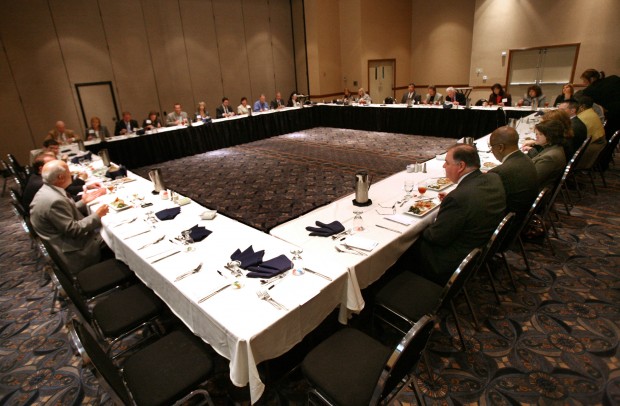
The 50 members of the Northwest Indiana Healthcare Council agree. They have determined a trauma center in Northwest Indiana is one of the group's priorities. The council was developed a few years ago as a result of The Times' One Region, One Vision initiative, and the council has developed a priority list that includes a trauma center.
People are also reading…
"Anytime you bring together leaders in a certain industry, you can only achieve great things working toward a common goal," said Jonathan Nalli, chief executive officer of Porter Hospital. "It's not always easy, and a lot of us are competitors, but we're all asking the question, 'How can we work together?'"
Don Fesko, chief executive officer of Community Hospital in Munster, said a number of the health industry representatives who sit on the council are members of the Indiana Hospital Association and meet regularly. But the council presents a different, helpful variable.
"To get elected officials to join in the meeting ... and they see the systems speaking in unison about (an issue), they see a consensus among leaders in the community that (an issue) is a priority," he said.
Patrick Bankston is council chairman, assistant dean and director of the Indiana University School of Medicine - Northwest and dean of the College of Health and Human Services at Indiana University Northwest. He said the council conducted a survey of its members and the top issues were the establishment of a trauma center in the region, medical care for the disadvantaged and a new Gary teaching hospital.
Larkin spoke to the group in late 2010 and told the council the state has eight trauma centers: three in Indianapolis, two in Fort Wayne, two in Evansville and one in South Bend. He said a committee created by an executive order from Gov. Mitch Daniels is studying trauma centers in the state. Bankston said the council report will be released later this year.
Speaking on behalf of Methodist Hospitals president and chief executive officer Ian McFadden, Denise Dillard, vice president of government and external affairs at Methodist Hospitals, said the experience has been positive for McFadden. He was pleased the council determined through a poll that Methodist would be a good partner for a region trauma center and teaching hospital.
Bankston said not only would a new teaching hospital help region health care but it would help with economic development, help the underserved and benefit other hospitals.
Fesko said the expansion of Indiana University School of Medicine - Northwest with the development of a teaching hospital is crucial to area health care because a physician shortage is being predicted for the future. Fesko said if students learn at local hospitals they are more likely to stay in the region.
Bankston said funding stands in the way of expansion.
"It's a matter of financing," he said. "The goodwill is there and the proper people are at the table."
Bankston said the council has met and heard guest speakers but hasn't had a lot of concrete accomplishments. That may change this year, he said.
"Maybe we could pick a smaller project we could work on right away, such as bringing more pediatricians to Gary," he said.
Gene Diamond, Northern Indiana Region chief executive officer of the Franciscan Alliance, formerly known as the Sisters of St. Francis Health Systems Inc., said getting all health care leaders together to talk is important.


